
„Viața e prea scurtă ca să înveți germană" chiar este un meme, iar dacă ai rămas vreodată blocat în fața lui der, die, das, gluma îți e deja clară. Așa că iată răspunsul sincer, fără ocolișuri: e greu de învățat germana? Da, mai greu decât spaniola sau italiana pentru cineva care învață prin engleză, și mai ușor decât japoneza sau araba. Foreign Service Institute din SUA încadrează germana la limbile de Categoria II — aproximativ 36 de săptămâni de studiu cu normă întreagă până la nivel profesional de lucru, față de 30 de săptămâni pentru franceză sau spaniolă. Cifra e reală, dar ascunde întrebarea mai utilă: care părți din germană sunt cu adevărat grele și care doar par grele fiindcă nimeni nu ți-a arătat soluția.
Întreabă cinci oameni dacă germana e o limbă grea și vei primi cinci răspunsuri diferite, pentru că fiecare s-a blocat în altceva. Articolul acesta desface cele trei părți din germană care chiar sunt grele, apoi arată cum shadowingul (ascultarea unui material audio autentic și repetarea lui cu voce tare, în timp real) închide diferența la cea mai grea dintre ele: să auzi și să produci sunete pe care gura ta nu a trebuit niciodată să le facă.
1. Sunetele: ü, ö, ch și R-ul german (ideal ca să-ți corectezi accentul devreme)
Germana are patru sunete care nu există în română și exact peste ele trec manualele în grabă.
Ü și ö sunt vocale rotunjite. Pentru ü, așază-ți gura ca și cum ai spune „u", dar rostește „i". Ö stă între „e" și un „o" închis, cu aceeași rotunjire a buzelor. Niciunul nu e rar sau opțional: für, müde, schön și hören sunt cuvinte de zi cu zi, nu excepții pe care le poți ocoli.
Apoi vine ch, care sunt de fapt două sunete cu o singură scriere. După e și i (ich, nicht) e un șuierat moale spre partea din față a gurii. După a, o și u (ach, Buch) coboară într-un raclaj mai aspru în gât, apropiat de „h"-ul românesc. Confundarea lor rareori blochează înțelegerea, dar e cel mai rapid mod de a suna ca cineva care a învățat germana din manual, nu de la vorbitori reali.
R-ul german încheie lista. Nu e r-ul vibrat din română și nici r-ul pentru care un american își curbează limba înapoi. Pronunția germană standard folosește un r uvular, produs aproape de fundul gâtului, deși multe accente regionale îl înmoaie la final de cuvânt până aproape de o vocală, ca în Uhr sau Vater. Lingvistica din spate e interesantă dacă vrei să citești despre ea, dar soluția practică e mai simplă decât orice tabel fonetic: ascultă sunetul de suficiente ori, în context, iar gura ta îl va copia în cele din urmă.
4 sunete germane care încurcă începătorii
Niciunul nu există chiar așa în română. Apasă play și repetă ce auzi.
Să auzi fiecare sunet de suficiente ori, în context, îți învață gura mai repede decât orice tabel fonetic
Înregistrări de Kampy, User:Tosca și joni prin Wikimedia Commons, CC BY-SA 3.0
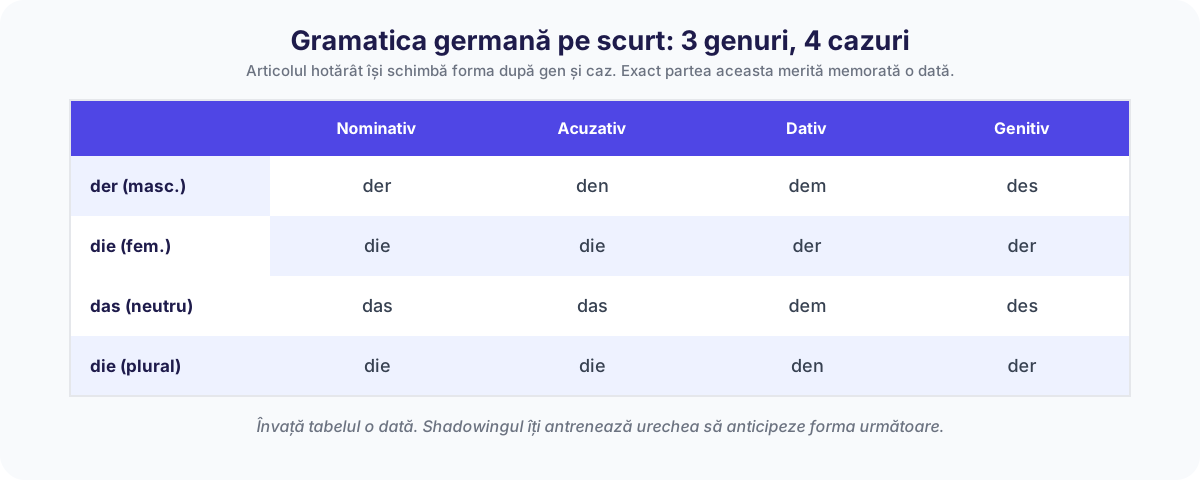
2. Gramatica: trei genuri, patru cazuri (funcționează din clipa în care nu mai încerci s-o memorezi)
Substantivele germane poartă unul dintre cele trei genuri (der, die, das), iar articolul își schimbă forma în funcție de rolul substantivului în propoziție: subiect, complement direct, complement indirect sau posesor. Patru cazuri pe trei genuri înseamnă vreo duzină de forme de articol de urmărit înainte să termini o singură propoziție.
Gramatica germană chiar este mai flexionară decât cea engleză și nu există scurtătură care să te scutească de învățarea tabelului de bază al articolelor. Dar iată ce sar peste majoritatea ghidurilor: vorbitorii fluenți nu consultă un tabel mental în mijlocul conversației. Au auzit der Mann, den Mann, dem Mann și des Mannes de atâtea ori încât forma corectă sosește înainte ca propoziția să se termine de construit în capul lor. Asta e recunoaștere de tipare, clădită prin expunere repetată — aceeași abilitate datorită căreia un vorbitor nativ de română spune „doi copii", nu „două copii", fără să recite vreo regulă.
Topica adaugă un al doilea strat. Verbul conjugat stă pe locul al doilea în propoziția principală, indiferent ce vine înaintea lui, iar în subordonată sare tocmai la final: Ich lerne heute Deutsch devine Ich weiß, dass ich heute Deutsch lerne. Partea asta răsplătește repetarea tiparului cu voce tare până ce ritmul devine automat, nu privitul într-o carte de reguli până se leagă logica pe hârtie.
3. Cuvinte compuse lungi și ascultatul la viteză nativă (ce repară shadowingul cel mai repede)
Germana construiește cuvinte noi lipindu-le pe cele existente și așa a ajuns Rindfleischetikettierungsüberwachungsaufgabenübertragungsgesetz numele unei legi reale (acum abrogate) și gluma de internet din spatele a jumătate dintre postările despre germană pe lângă care ai derulat. În practică, majoritatea compuselor pe care le vei întâlni sunt mult mai scurte: Handschuh (pantof de mână, mănușă), Kühlschrank (dulap rece, frigider), Krankenhaus (casa bolnavilor, spital). Odată ce vezi tiparul, cuvintele lungi încetează să sperie și devin descifrabile.
Citirea acestor cuvinte nu e problema reală. Problema e să le auzi la viteză maximă, de la cineva care le-a spus de zece mii de ori și nu face pauze între silabe de dragul tău. Audio-ul autentic merge repede, înghite sunete și leagă cuvintele, exact așa cum funcționează vorbirea relaxată în orice limbă. Diferența aceea dintre „germana pe care o pot citi" și „germana pe care o înțeleg după ureche" e una dintre cele mai frecvente plângeri ale cursanților de nivel mediu de pe platforma de învățare a Deutsche Welle.
Exact asta rezolvă shadowingul direct, pentru că shadowingul e un exercițiu de ascultare îmbrăcat în haine de exercițiu de vorbire. Nu poți repeta o propoziție pe care nu o poți descompune, așa că practica îți obligă urechea să prindă din urmă viteza nativă, un fragment scurt pe rând, în loc să aștepți ca înțelegerea să apară de la sine.

Cum să înveți germana: o rutină de shadowing care chiar funcționează
Cititul despre părțile grele ale germanei nu le repară. Iată o rutină construită în jurul shadowingului: asculți un fragment scurt de audio autentic și îl repeți cu voce tare, sincron, până ce ritmul se fixează.
- Alege un singur fragment scurt, nu o lecție întreagă. Pentru primele încercări, 30–90 de secunde dintr-o scenă bat un clip de 20 de minute, pentru că ideea e repetiția, nu acoperirea. Iată unul german de la care poți porni: o conversație la restaurant, destul de lentă cât s-o urmărești și destul de rapidă cât să fie reală. Ia primul minut și rămâi acolo până devine automat, în loc să rulezi toată scena o dată.
-
Ascultă o dată cu gura închisă. Prinde ritmul și forma generală a propoziției înainte să încerci să reproduci ceva. Nu traduce din mers, doar observă unde cade accentul.
-
Pornește din nou și repetă în același timp. Vorbește în paralel cu înregistrarea, stând cât mai aproape în urma vorbitorului. În aplicația Speak Pro pasul acesta stă în redarea propoziție cu propoziție, așa că poți încetini un cuvânt greu la 0,5x fără să pierzi restul fragmentului.
-
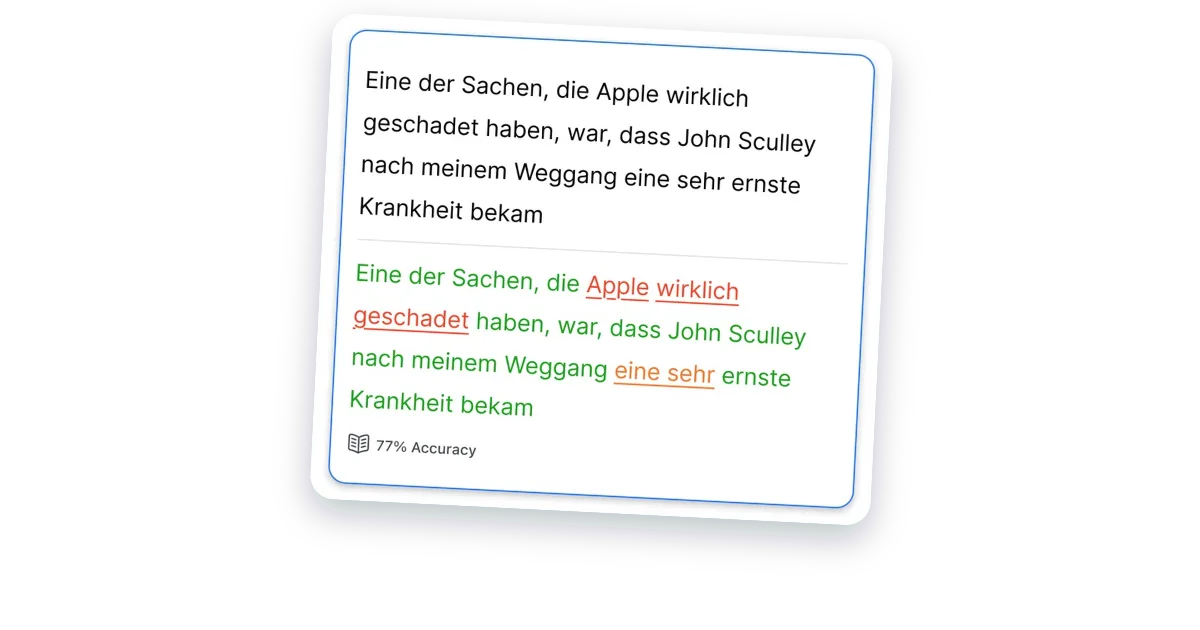
Înregistrează-te și compară. Ăsta e pasul care prinde cu adevărat confuziile ü/ö și terminațiile de caz pe care le înghiți fără să bagi de seamă. Speak Pro îți notează înregistrarea față de original, cuvânt cu cuvânt, ca să știi exact ce sunet să repari în loc să ghicești:

- Repetă același fragment de 3–5 ori înainte să mergi mai departe. Germana răsplătește repetiția mai mult decât majoritatea limbilor, fiindcă răsplata (să ghicești corect ce terminație de caz urmează) apare abia după ce urechea a auzit tiparul de suficiente ori ca să-l anticipeze. Dacă vrei o bibliotecă întreagă de scene și seriale pentru exersat, shadowingul cu filme și seriale reale e un pas următor bun, de îndată ce fragmentele izolate încep să pară ușoare.
De ce funcționează mai bine decât un manual de germană
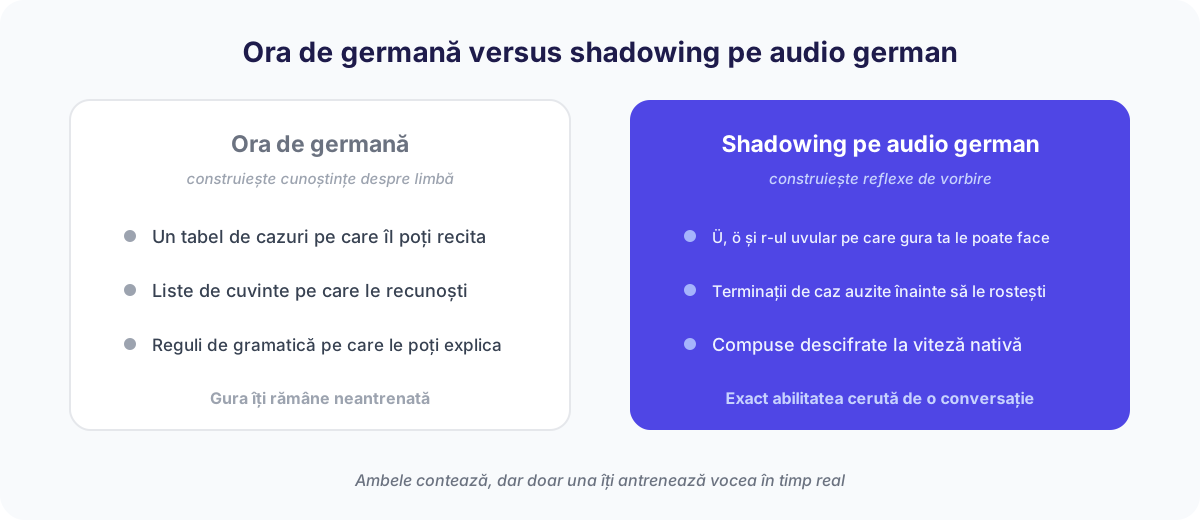
Exercițiile de gramatică și listele de cuvinte construiesc cunoștințe despre germană. Shadowingul construiește reflexele fizice ale vorbirii ei: să prinzi ritmul, să-ți dozezi respirația pe o propoziție care își ține verbul până la capăt, să produci sunete pe care gura ta nu le-a produs niciodată. Exact asta e diferența dintre a citi Rindfleischetikettierungsüberwachungsaufgabenübertragungsgesetz pe hârtie și a înțelege un vorbitor grăbit care spune Kühlschrank într-o propoziție auzită o singură dată.
Asta explică și de ce germana pare mai grea decât arată în primele săptămâni. Nu înveți doar cuvinte, ci antrenezi simultan o abilitate motorie nouă și una de ascultare, sub presiunea timpului și fără buton de pauză într-o conversație reală. Speak Pro transformă orice audio german — un serial, un podcast, un clip de YouTube — într-o sesiune structurată de shadowing cu feedback instant la pronunție, așa că abilitatea crește de fiecare dată când exersezi, nu doar când se nimerește să vorbești cu cineva.
Întrebări frecvente despre învățarea germanei
E grea de învățat limba germană?
Pentru vorbitorii de engleză, da, moderat. Foreign Service Institute din SUA încadrează germana la Categoria II: aproximativ 36 de săptămâni de studiu cu normă întreagă și circa 828 de ore de curs până la nivelul profesional de lucru. Părțile grele sunt pronunția, sistemul cu patru cazuri și ascultatul la viteză nativă, nu mărimea vocabularului.
E germana mai grea decât franceza sau spaniola?
Oarecum, dar nu dramatic. FSI pune franceza și spaniola în Categoria I la 30 de săptămâni, iar germana în Categoria II la circa 36 de săptămâni, deci cu vreo cincime mai mult, nu de două ori. Săptămânile în plus se duc în sistemul de cazuri și în topică, nu într-un vocabular mai mare.
Pot învăța germana pe cont propriu?
Da, tot, mai puțin feedbackul. Gramatica, vocabularul și cititul sunt bine acoperite de materiale gratuite. Ce îți dă rar studiul individual este cineva care să-ți corecteze cu voce tare ü, ö și ch — de aceea contează mai mult să te înregistrezi lângă audio autentic decât să mai treci printr-un capitol de manual.
Începe shadowingul în germană chiar azi
Deci, e greu de învățat germana? Trei lucruri chiar sunt: sunetele, sistemul de cazuri și înțelegerea vitezei native. Niciunul nu devine mai ușor citind încă o explicație de gramatică. Devin mai ușoare așa cum un muzician progresează la instrument — prin repetiția pe care o ține minte corpul, exact pentru asta fiind construit shadowingul ca tehnică. Alege un fragment scurt, ascultă, repetă cu voce tare, înregistrează-te și fă-o din nou mâine. Rutina asta, nu încă o serie de zile într-o aplicație de vocabular, e ceea ce mută cu adevărat germana din „grea" în „învățată".
Ești gata să vorbești, nu doar să înveți?
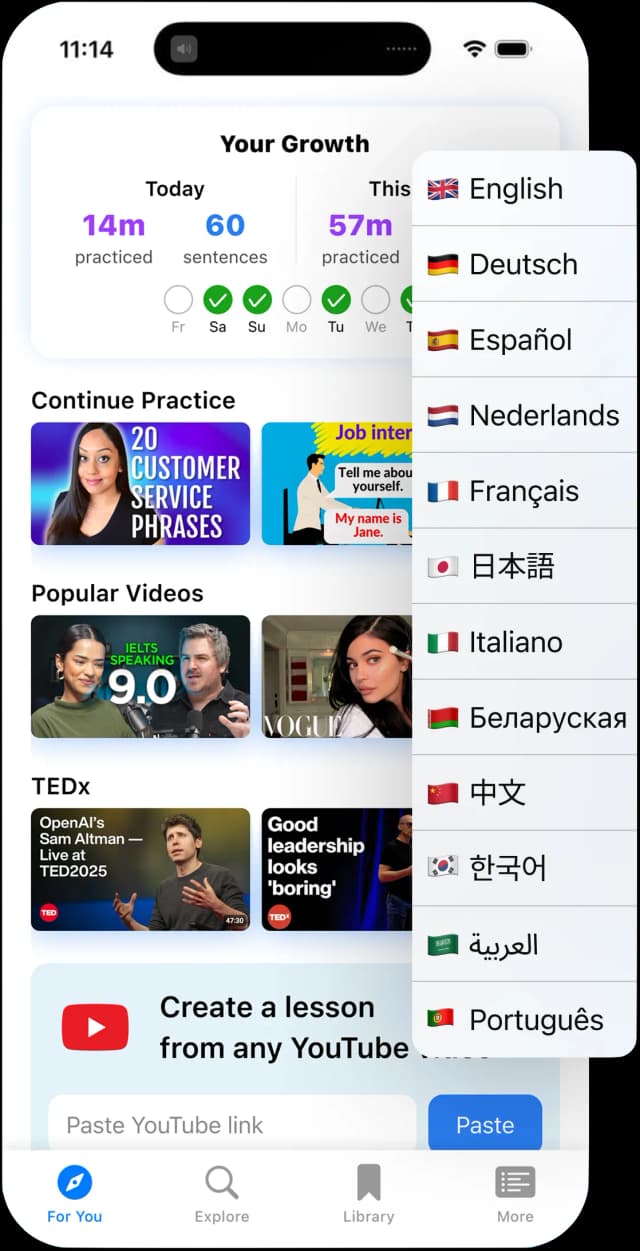
Transformă orice videoclip de pe YouTube într-o sesiune ghidată de shadowing, cu feedback instant de la AI. Practica zilnică de vorbire devine simplă.