
Shadowing English speeches is one of the fastest ways to close the gap between "I understand English" and "I can speak it fluently." Instead of a textbook dialogue read by a voice actor, you're matching the rhythm of a real person delivering real words: Emma Watson in front of the United Nations, Steve Jobs on a Stanford stage, Taylor Swift addressing 30,000 graduates at Yankee Stadium. Famous speeches give you clear audio, a transcript you can check, and stakes high enough that the speaker never mumbles.
This guide is a 3-day plan built around three speeches, each chosen for a different skill: clarity, storytelling rhythm, and speed. Do one a day, in order, and by day three you'll have shadowed roughly 20 minutes of real spoken English — more useful practice than most learners get in a month of passive listening.
What Is Speech Shadowing and Why It Works
Speech shadowing means listening to audio and speaking along with it, a beat or two behind the speaker, instead of listening first and repeating after. You're not translating and you're not memorizing; you're tracking sound in real time, matching stress, pausing where the speaker pauses, and letting your mouth catch up to your ears.
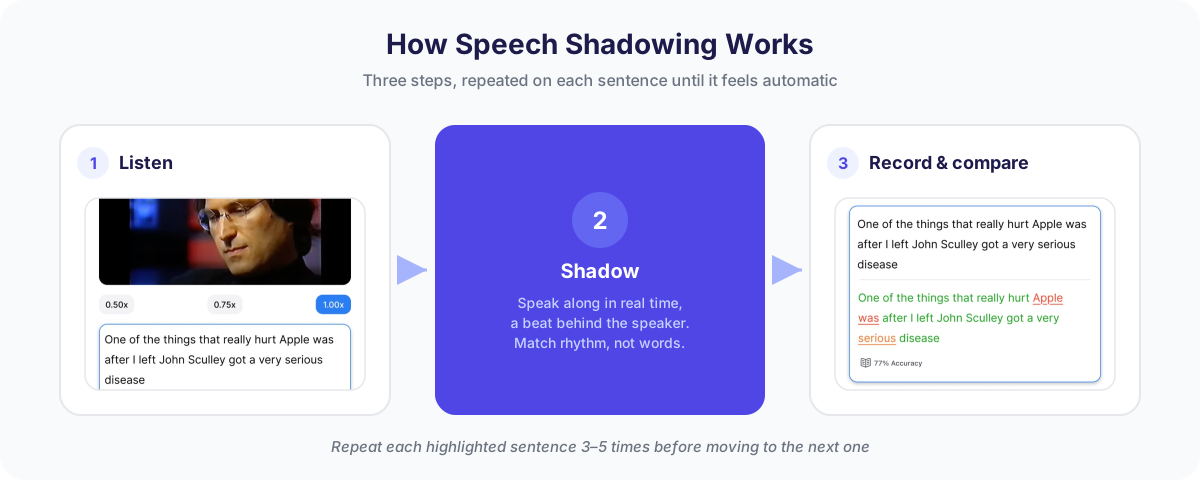
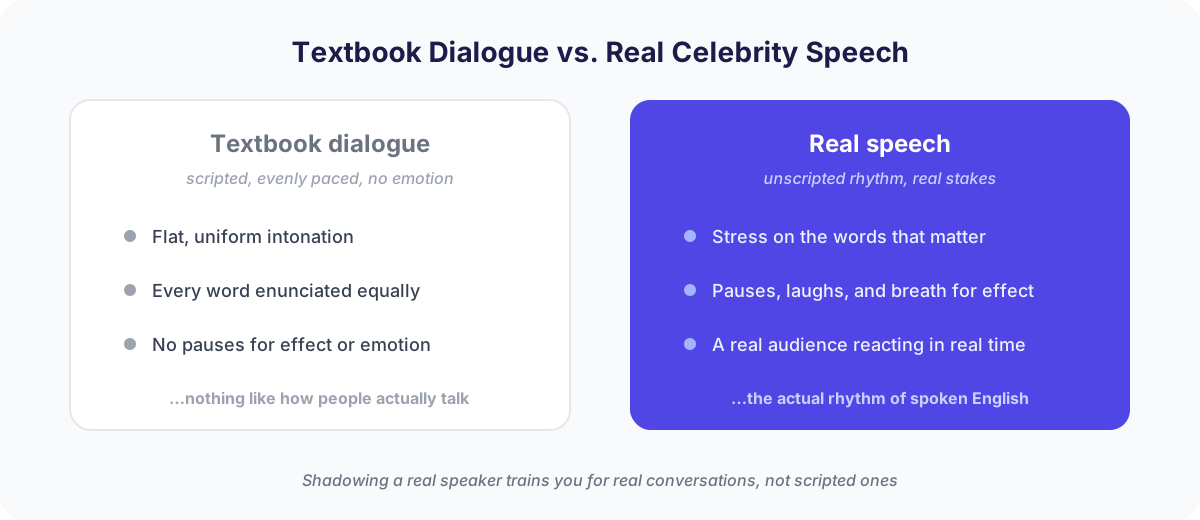
Researchers have studied this exact task since the 1950s, under the label "speech shadowing." A large body of work in journals like Applied Psycholinguistics has used shadowing tasks to study how the brain processes and produces speech simultaneously. Language teachers borrowed the same task decades later because it forces your mouth to produce the exact rhythm and stress of a real speaker, not the flattened delivery of a scripted lesson.
Famous speeches solve the two biggest problems with shadowing material. First, audio quality: a professionally recorded address has none of the background noise or crosstalk that makes podcasts and movie scenes hard to shadow. Second, pacing: a speaker addressing a large room naturally slows down, pauses between ideas, and stresses key words so the whole audience can follow.
Day 1: Warm Up With Emma Watson's HeForShe Speech
Start with the easiest speech in this plan. Emma Watson's 2014 address launching the HeForShe campaign at the United Nations is measured, deliberate, and built almost entirely from short, complete sentences. That makes it ideal for a first attempt at shadowing a full speech rather than a 30-second clip.
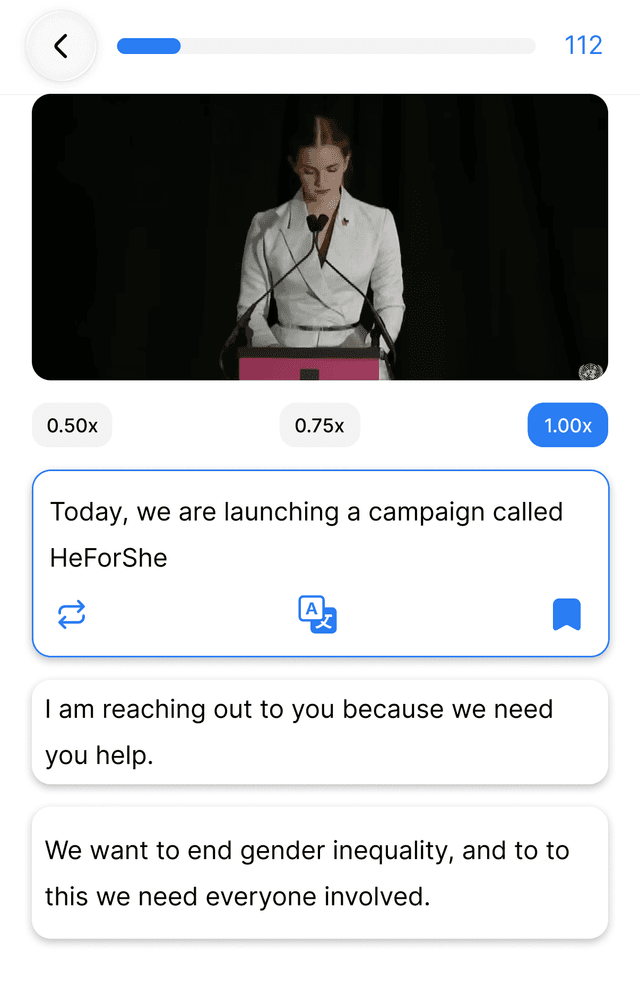
Practice these lines — click one to jump to it in the video above
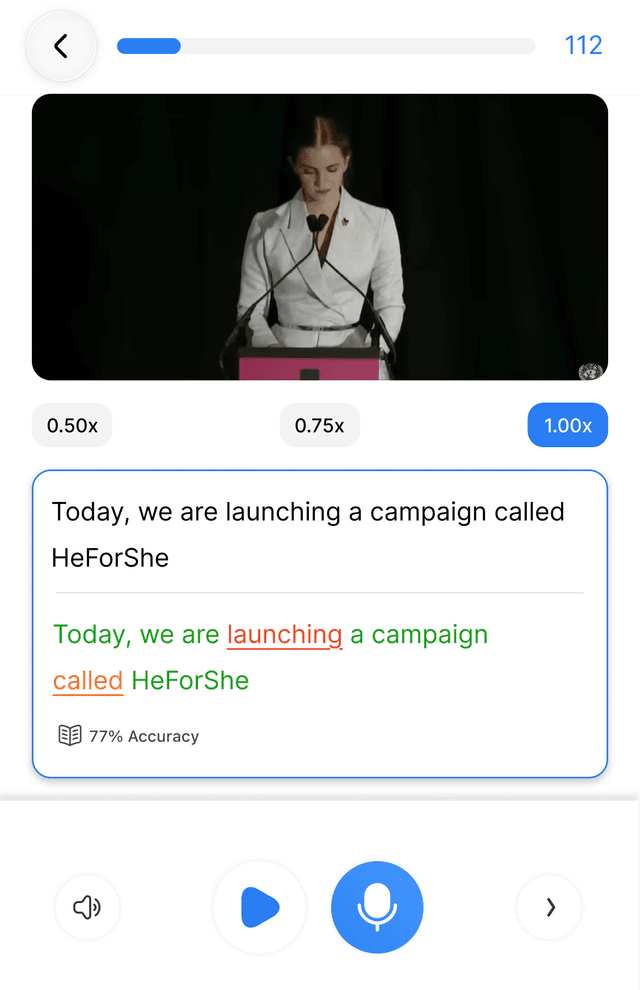
Record these lines and get instant pronunciation feedback in the Speak Pro app.
The line to shadow first
"I was appointed six months ago and the more I have spoken about feminism, the more I have realized that fighting for women's rights has too often become synonymous with man-hating." Notice how she stresses "six months," "more," and "man-hating," the words carrying new information, while gliding quickly over small connecting words like "and," "the," and "has." That stress pattern, not the individual words, is what you're training your mouth to reproduce. You can find the full text of the speech on UN Women's site if you want to read along before you shadow.
Today's 15-minute schedule
- Minutes 0–3: Listen to the six lines above without speaking. Just notice where she stresses "HeForShe," "need," "involved," and "synonymous," and where she slows down for emphasis.
- Minutes 3–10: Shadow lines 1–4 three times each, staying a beat behind her. Match her pace, not just her words.
- Minutes 10–15: Record lines 5 and 6 one at a time in Speak Pro and check the AI pronunciation feedback for each. Where did your accuracy score drop, and why?
Words and expressions worth studying from this part of the speech:
- galvanize — /ˈɡælvənaɪz/. Stress on the first syllable. It means to shock or push people into action, stronger than a plain "encourage."
- advocates — /ˈædvəkəts/. As a noun (people who support a cause), the stress stays on the first syllable — a common mistake is shifting it to the second.
- tangible — /ˈtændʒɪbəl/. Stress on the first syllable; it means concrete and real, the opposite of abstract.
- synonymous — /sɪˈnɒnɪməs/. Stress on the second syllable. This one trips up a lot of learners, who default to stressing the first syllable instead.
- man-hating — /ˈmænˌheɪtɪŋ/. Primary stress on "man," a lighter secondary stress on "hat-"; the two words fuse into a single compound in fast speech.
Step 1: Listen sentence by sentence
Step 2: Record and check your accuracy
Day 2: Build Storytelling Rhythm With Steve Jobs' Stanford Address
Steve Jobs' 2005 Stanford commencement address is one of the most-watched speeches in English: three short stories, each with a clear setup, turn, and payoff. Shadowing it trains a skill Day 1 didn't: following a speaker as their pace shifts between narrative and the punchline of each story.
Practice these lines — click one to jump to it in the video above
Record these lines and get instant pronunciation feedback in the Speak Pro app.
The line to shadow first
"Stay hungry. Stay foolish." The famous closing line is short on purpose. It's easy to shadow, but shadow the build-up too: "Your time is limited, so don't waste it living someone else's life." Notice the pause after "limited" and the way "waste" gets extra stress. The Steve Jobs Archive has the full transcript and context for the speech if you want to study the text before you shadow it out loud.
This is also a good moment to check your form. If you've been shadowing casually and want a more structured version of this same loop (listen, shadow, record, compare), our guide to the core shadowing technique walks through where the method came from and why each step matters.
Today's 15-minute schedule
- Minutes 0–3: Listen to the "connecting the dots" story (the first of the three) without speaking.
- Minutes 3–10: Shadow it three times, paying attention to where his pace slows for emphasis.
- Minutes 10–15: Shadow "Stay hungry, stay foolish" ten times in a row, fast. Repetition at speed is what makes a phrase automatic.
Words and expressions worth studying from this part of the speech:
- connecting the dots — /kəˈnɛktɪŋ ðə dɒts/. The idiom that gives this story its name: making sense of separate past events only when you look back on them.
- drop-in — /ˈdrɒp ɪn/. Stress on "drop." Here it's a noun for someone who keeps attending classes without being formally enrolled.
- unwed — /ʌnˈwɛd/. Stress on the second syllable; a slightly formal, old-fashioned word for "not married."
- put (someone) up for adoption — /pʊt ʌp fɔːr əˈdɒpʃən/. A fixed expression — it always appears in this exact form, not word for word translated.
- popped out — /pɒpt aʊt/. A casual, almost joking way to say "was born," a deliberate tonal shift in the middle of a serious story.
Day 3: Push Your Pace With Taylor Swift's NYU Speech
By day three you've built the reflex; now push it. Taylor Swift's 2022 NYU commencement address is faster and more conversational than the other two speeches. She interrupts herself, adds asides, and speeds up when she's excited — harder to shadow, which is exactly the point.
Practice these lines — click one to jump to it in the video above
Record these lines and get instant pronunciation feedback in the Speak Pro app.
The line to shadow first
"Learn to live alongside cringe. No matter what you do, your life will craft a cringe legacy." This section moves quickly and includes casual connected speech: "no matter what" collapses into something closer to "no-madda-whut" in fast delivery. If a full transcript helps you follow along at speed, Rev.com published a complete, timestamped transcript of the address.
Today's 15-minute schedule
- Minutes 0–3: Listen once through the "life hacks" section without speaking. Just try to catch the overall shape.
- Minutes 3–10: Shadow the same section three times, accepting that you'll drop words on the first pass. Speed comes with repetition, not on attempt one.
- Minutes 10–15: Record yourself and compare. If you're consistently a full sentence behind by the end, drop back to a slower section and rebuild from there before trying the fast section again.
Words and expressions worth studying from this part of the speech:
- glittery leotard — /ˈɡlɪtəri ˈliːətɑːrd/. Stress on the first syllable of each word; a one-piece sparkly stage costume, the kind worn for a big arena show.
- elated — /ɪˈleɪtɪd/. Stress on the second syllable; means extremely happy, stronger than just "glad" or "pleased."
- not a single one — /nɒt ə ˈsɪŋɡəl wʌn/. An emphatic way to say "none" — stronger and more deliberate than just "no one."
- patchwork quilt — /ˈpætʃwɜːrk kwɪlt/. Stress on "patch" and on "quilt"; a blanket sewn from many different pieces of fabric, used here as a metaphor for being shaped by many people.
- empathy — /ˈɛmpəθi/. Stress on the first syllable; the ability to understand and share someone else's feelings.
Common Questions About Shadowing Speeches
What is speech shadowing?
Speech shadowing is a practice technique where you listen to audio and speak along with it in real time, staying a word or two behind the speaker rather than pausing to repeat. It was originally used in psychology research on attention and later adopted by interpreter trainers and language teachers as a pronunciation and fluency drill.
Which famous speeches are good for learning English?
Look for speeches with clear audio, a strong emotional arc, and a full transcript available: commencement addresses (Steve Jobs, Taylor Swift), advocacy speeches (Emma Watson's HeForShe address), and well-known TED talks all fit. Avoid speeches with heavy jargon or a very fast, list-heavy delivery until you've built up speed with clearer material first.
Does shadowing speeches improve English fluency?
Yes, shadowing trains the parts of fluency that vocabulary study doesn't touch: timing, stress, and the physical reflex of producing speech without pausing to think. It won't teach you new grammar rules on its own, so pair it with a speech whose language level roughly matches yours, and repeat each clip until the rhythm feels close to automatic before moving on.
Start Shadowing Real Speeches Today
Three speeches is a starting point, not a ceiling. Once Emma Watson, Steve Jobs, and Taylor Swift stop feeling difficult, move on to a TED talk, a press conference, or a speech in an accent you want to learn. The skill transfers, because you're training the reflex of tracking real speech in real time, not a memorized script.
The part most learners skip is the comparison step, because doing it by ear is slow and it's easy to be too generous with yourself. Speak Pro automates it: record your shadowed sentence and it scores your pronunciation against the original, word by word.
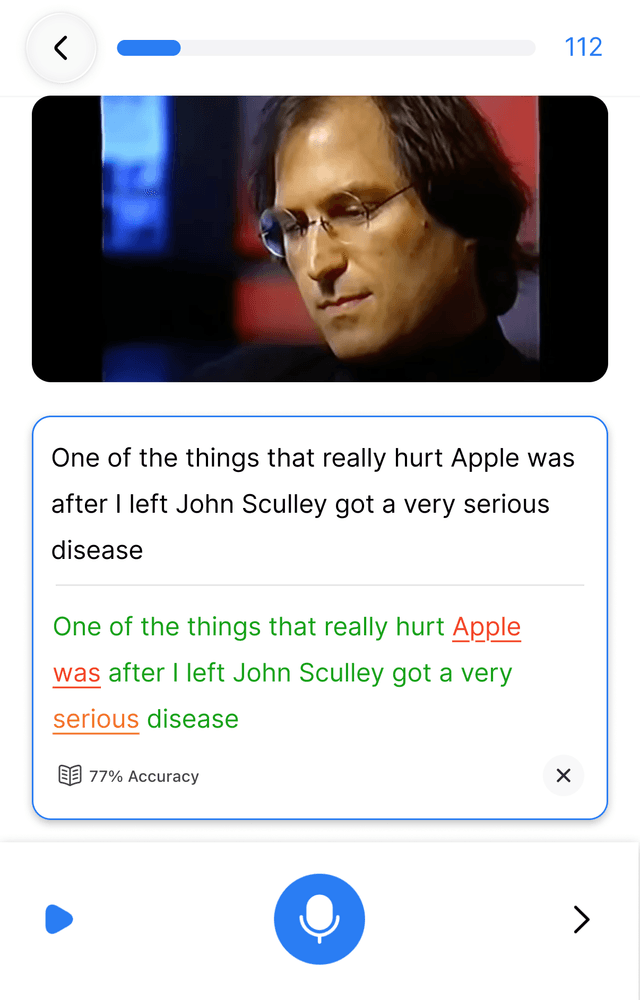
Paste any speech from YouTube into Speak Pro and it becomes a structured shadowing lesson: split into sentences, slowed down where you need it, and scored when you record yourself. Shadowing English speeches works because the material is real; the app just makes sure you're actually improving, not just repeating the same mistakes on loop.
Ready to finally speak instead of just study?
Turn any YouTube video into a guided shadowing session with instant AI feedback. Daily speaking practice becomes effortless.