
Type "does shadowing actually work" into a search engine and you'll find two very different worlds: enthusiastic YouTube testimonials on one side, and a quiet body of shadowing research on the other (lab experiments, classroom trials, and, most recently, full systematic reviews). This article walks through that second world. Not because the testimonials are wrong, but because knowing what shadowing studies have measured tells you what to expect, how fast, and which parts of the hype to ignore. If you're new to the technique itself, read our guide to the science of shadowing first. This article assumes you know the basic drill and asks a harder question: what does the evidence say?
The short version: the research on the shadowing method is substantial, spans 70 years and several academic fields, and is more encouraging, and more specific, than most learners realize. Here's how to read it in three steps, from the oldest lab studies to the newest systematic review, with a practical takeaway at each stop.
What shadowing research is and why it matters
"Shadowing research" isn't one thing. The same technique (repeat speech aloud while you hear it) has been studied by three separate groups for three separate reasons: psychologists used it to probe attention and speech perception, interpreter trainers used it to build real-time speaking stamina, and language educators have tested it as a classroom tool for listening and pronunciation. That's unusual. Most study techniques are validated (if at all) inside a single field; shadowing has independent evidence from several.
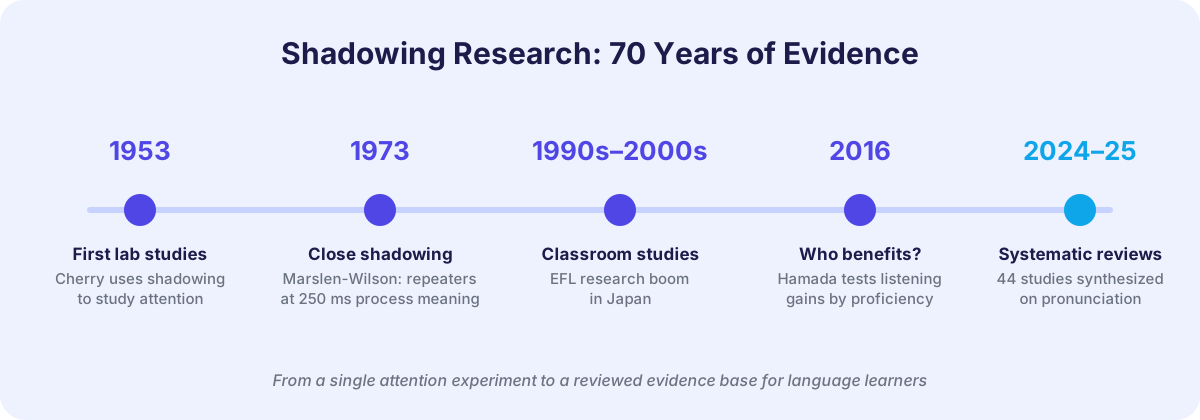
Why should a learner care? Because the type of study determines the type of claim you can trust. A single small classroom study says "this worked once, for these students." A systematic review (a structured analysis of every published study on a question) can say "this pattern holds across dozens of experiments." Shadowing now has both, and the pattern they agree on is what you want before you invest daily practice time. The three steps below follow the evidence in chronological order, because each generation of shadowing studies answered a different question: Can the brain even do this? → Does it help language learners? → How strong is the evidence overall?
Step 1: the lab studies, proof that shadowing engages the whole language system
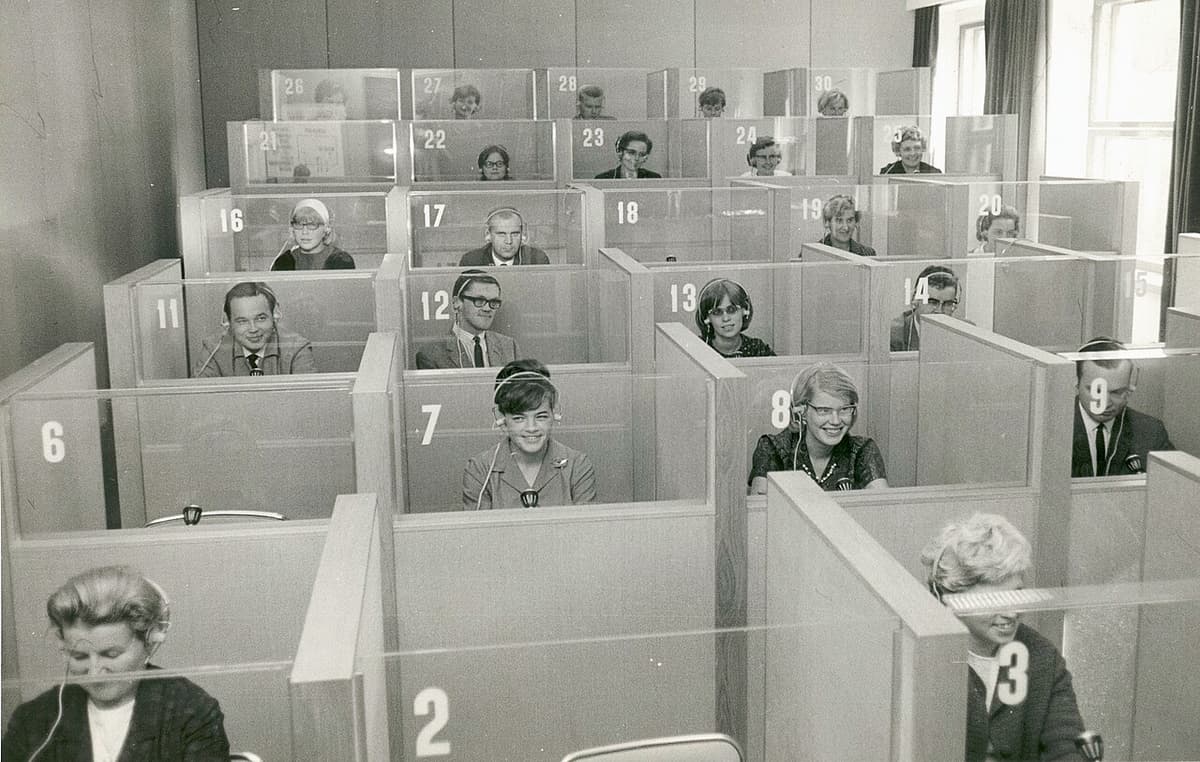
The earliest shadowing studies weren't about language learning at all. In 1953, psychologist Colin Cherry had subjects repeat speech played into one ear while ignoring the other, using speech shadowing as a laboratory tool to study attention. Twenty years later came the study every psycholinguistics student still reads: William Marslen-Wilson's 1973 paper in Nature, Linguistic structure and speech shadowing at very short latencies. Marslen-Wilson found "close shadowers" who could repeat continuous speech at a delay of roughly 250 milliseconds, about one syllable behind the speaker.
The key finding
The remarkable part wasn't the speed. It was the errors. When close shadowers made mistakes, their errors were grammatically and semantically consistent with the sentence so far. They weren't parroting sound; their brains were processing syntax and meaning while their mouths reproduced the audio, all within a quarter of a second. That is the foundational piece of shadowing technique evidence: repeating speech at speed is not a shallow, mechanical act. It forces perception, comprehension, and articulation to run simultaneously, exactly the combination you need in real conversation.
Your practice takeaway
You don't need to shadow at 250 milliseconds like a lab-selected close shadower. The takeaway is about what the task recruits: even imperfect shadowing engages your full listening-understanding-speaking loop at once, which passive listening never does. Practically: shadow material you understand at least roughly, stay as close behind the speaker as you can without freezing, and don't stop to translate. The simultaneity is the exercise, so protect it even at the cost of accuracy.
Step 2: the classroom studies, what happens when real learners shadow
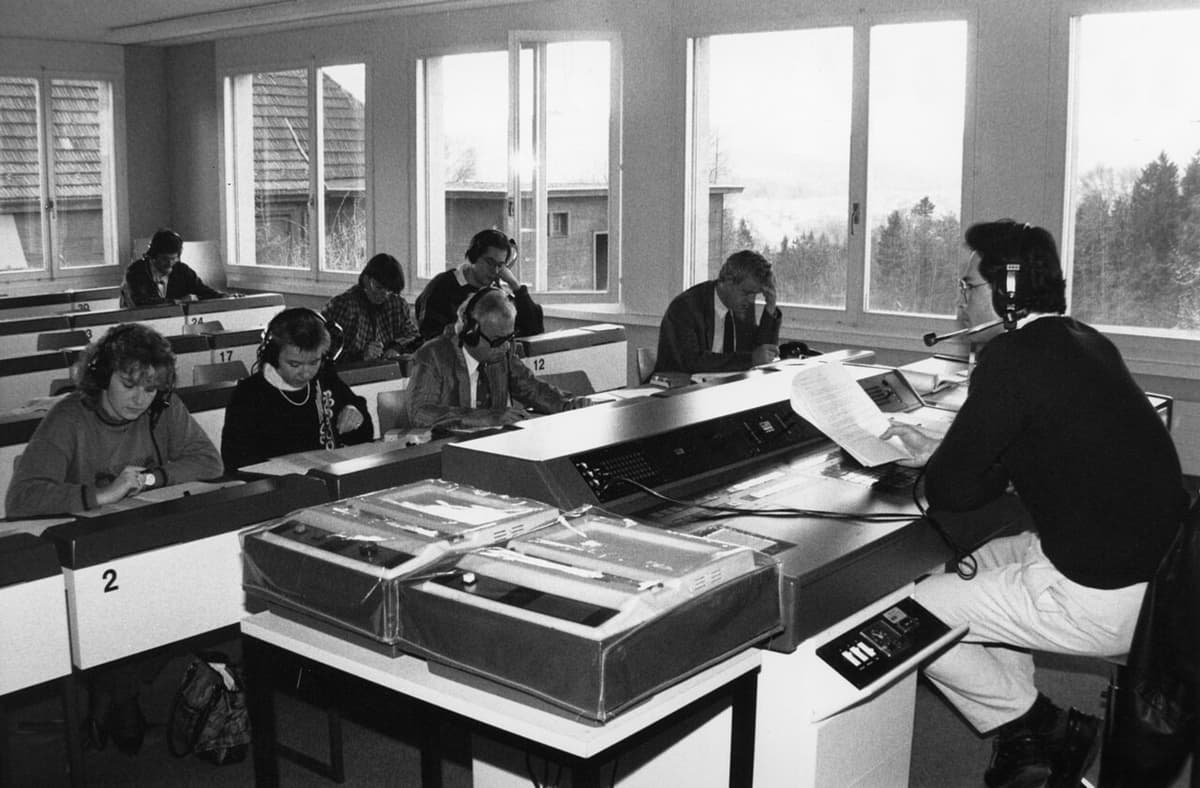
From the 1990s onward, shadowing studies moved from psychology labs into language classrooms, driven largely by researchers in Japan testing it with English learners. The central figure here is Yo Hamada, whose experiments put the classroom claims on a measurable footing. In one widely cited study, Shadowing: Who benefits and how? (Language Teaching Research, 2016), 43 Japanese university students shadowed regularly, and Hamada tested their phoneme perception and listening comprehension before and after.
The key finding
Hamada's results were refreshingly precise: learners at both lower and intermediate proficiency improved their phoneme perception (their ear for the individual sounds) but the significant gains in overall listening comprehension showed up mainly in the lower-proficiency group. In other words, shadowing reliably tunes bottom-up listening skills, and how far that translates into comprehension gains depends on where you start. Pronunciation-focused research on the shadowing method points the same way: an 8-week mobile-shadowing study by Foote and McDonough, Using shadowing with mobile technology to improve L2 pronunciation (2017), found learners improved in comprehensibility and fluency (though not in rated accentedness) after practicing just 10 minutes a day, four days a week.
Your practice takeaway
Two numbers from this generation of studies translate straight into practice. First, 10 minutes, four times a week was enough to produce measurable pronunciation gains in eight weeks. Consistency beat volume. Second, the biggest listening payoffs came when the material slightly outpaced the learner's comfort zone but stayed comprehensible. So schedule short, near-daily sessions with audio you understand at 80–90%, and expect ear-and-flow improvements before you expect your accent to transform.
Step 3: the systematic reviews, and how to test the findings on yourself
Individual studies can mislead: small samples, motivated volunteers, one-off contexts. That's why the most important recent development in second language shadowing research is synthesis: reviews that gather every qualifying study and look for patterns. A 2024 University of Oxford systematic review of shadowing, Shadowing for pronunciation by Benen Whitworth, screened six databases and analyzed 44 studies on shadowing and second-language pronunciation.
The key finding
The review's conclusion is the closest thing shadowing has to an official verdict: shadowing training can improve learners' comprehensibility, intelligibility, and suprasegmental control (fluency, rhythm, prosody) while the evidence for individual sounds (segments) remains inconclusive. Learners in the reviewed studies also consistently described shadowing as "interesting, enjoyable, and effective." Notice what that verdict does not say: it doesn't promise a native accent, and it doesn't claim shadowing replaces vocabulary or grammar work. It says the technique reliably makes your speech easier to follow and your delivery smoother, which for most real-world goals is the prize.
Your 3-day starter schedule
The reviewed studies overwhelmingly used short, repeated sessions, so replicate that across three days:
- Day 1: pick one 30–90 second clip, listen twice, then shadow it three times.
- Day 2: same clip, but record yourself once and compare against the original.
- Day 3: new clip, same routine, plus one "cold" shadow of Day 1's clip to feel the difference.
Below is a short movie scene to shadow. Press play and repeat right after the speaker:
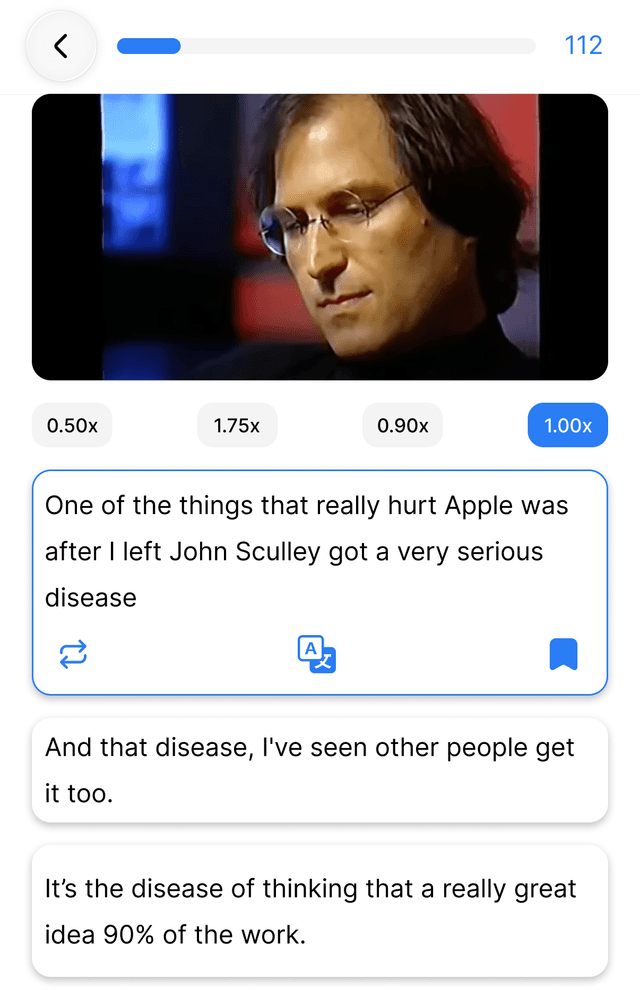
The studies also point to two practical problems: learners need material at the right difficulty, and they can't easily judge their own output. Both are solvable. In the Speak Pro app any YouTube video becomes a sentence-by-sentence shadowing lesson you can replay at 0.5x–1.75x speed until you keep pace:
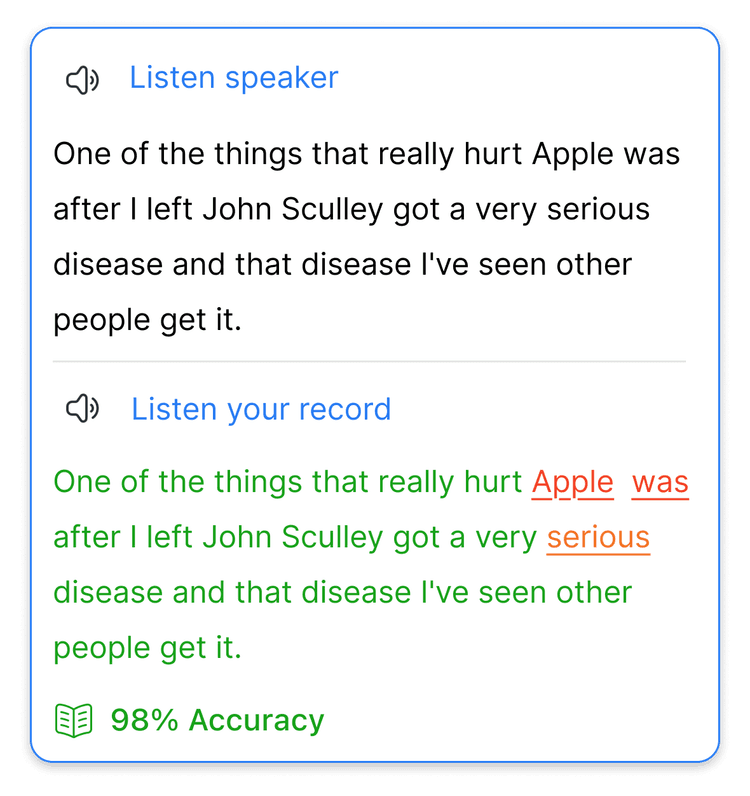
And for the self-judgment problem (the recording-and-comparing step that Foote and McDonough's participants did with iPods), Speak Pro scores your recording against the original, word by word:
Common questions about shadowing research
What does research say about shadowing?
Across lab, classroom, and review-level evidence, research says shadowing reliably improves comprehensibility, fluency, rhythm and prosody, and bottom-up listening skills. Gains in individual sounds and overall accent are less consistent. Lab studies also show shadowing engages perception, comprehension, and articulation simultaneously, which explains why it trains real-time speaking better than silent study.
Is shadowing evidence-based?
Yes. Unusually so for a self-study technique. Shadowing has peer-reviewed evidence from three independent fields: psycholinguistics (since Cherry 1953 and Marslen-Wilson 1973), interpreter training, and language education. Most importantly, it has passed the stricter test of systematic review: a 2024 Oxford synthesis of 44 studies confirmed consistent pronunciation and fluency benefits.
How many studies support shadowing?
The 2024 systematic review screened six databases and analyzed 44 studies on shadowing for second-language pronunciation alone, and that count excludes the separate literatures on listening comprehension and psycholinguistics. Most studies involved university-level, intermediate learners of English, with sessions as short as 10 minutes producing measurable gains within about eight weeks.
Why this works better than textbook study
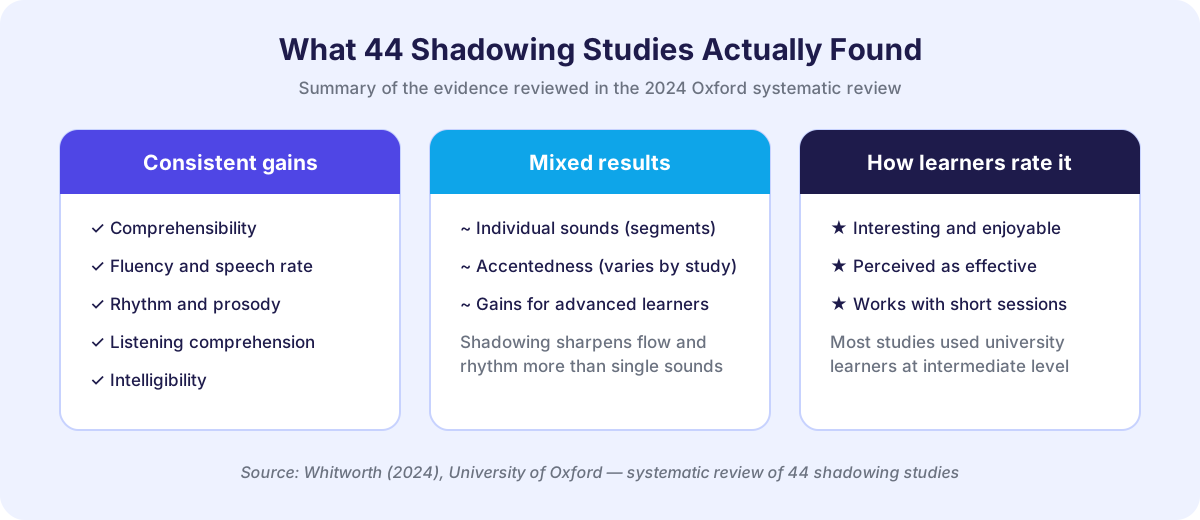
Textbooks train knowledge about a language, and the research explains why that's not enough: none of the measured shadowing gains (comprehensibility, fluency, prosody, phoneme perception) can be built by reading rules, because they live in the real-time loop between ear and mouth. Marslen-Wilson's shadowers proved that loop runs on quarter-second timing; no grammar exercise operates anywhere near that speed. The classroom studies make the same point from the other side: learners improved not because they acquired new facts, but because repeated synchronized production automated skills they technically already "knew."
That's also the honest limit of the evidence. The studies do not show shadowing replacing vocabulary study, reading, or conversation practice. It's a targeted drill for the speech loop, and it works best layered on top of normal input. If you understand a lot but freeze when speaking, that's precisely the gap the shadowing studies address, and the gap we dissect in why you still can't speak fluently.
Put the evidence to work
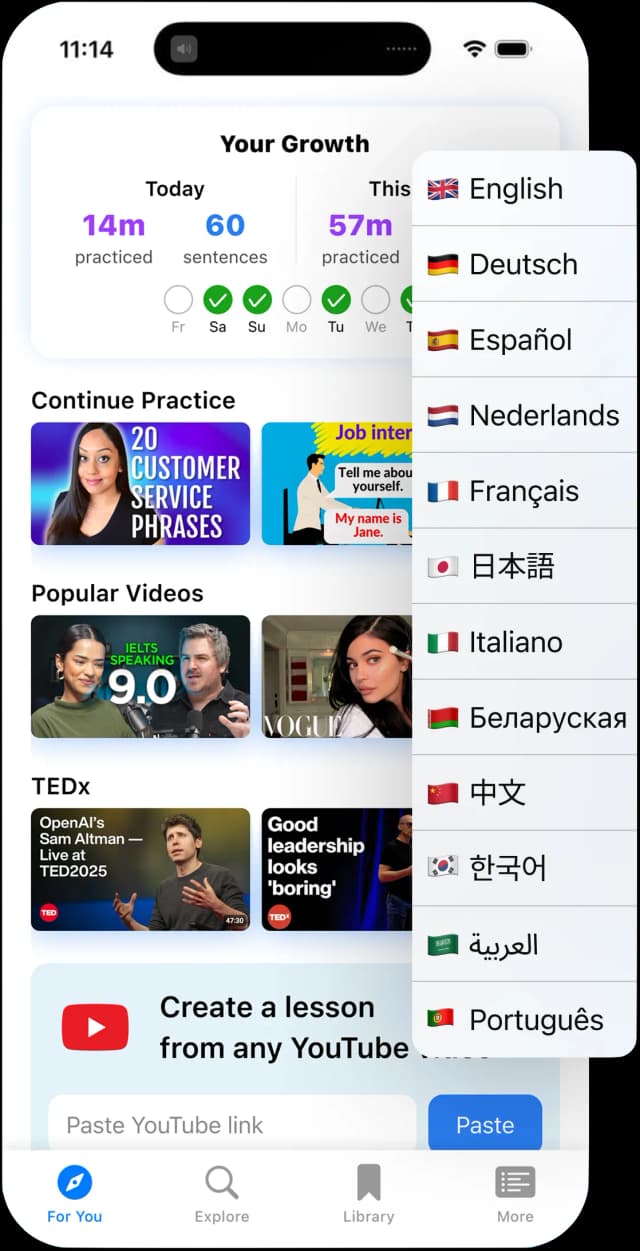
You now know more about shadowing research than most people teaching the technique online: it's backed by 70 years of lab work, two decades of classroom trials, and a 44-study systematic review that confirms real, specific gains. The studies converge on a simple prescription: short sessions, near-daily, with comprehensible audio, a recording step, and honest feedback. Speak Pro was built around exactly that loop: pick any YouTube video, shadow it sentence by sentence, and get AI feedback comparing your voice to the original. The evidence says ten minutes a day is enough to start; today is as good a day as any.
Ready to finally speak instead of just study?
Turn any YouTube video into a guided shadowing session with instant AI feedback. Daily speaking practice becomes effortless.