
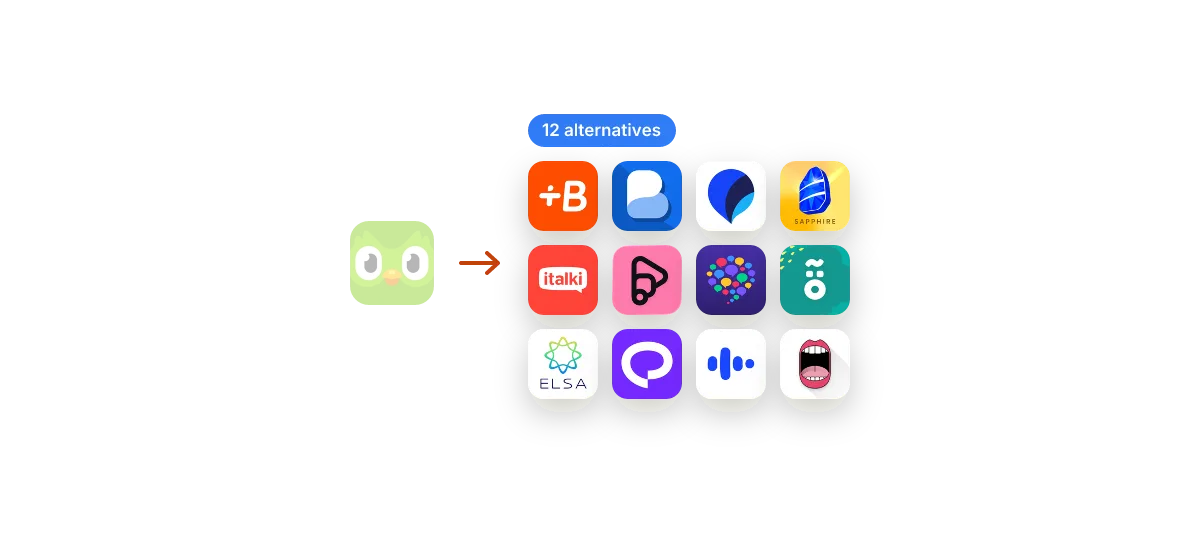
People go looking for Duolingo alternatives for one reason more than any other: after months of streaks, they still freeze when someone talks to them. Duolingo is good at what it was built for, which is daily vocabulary and grammar in small game-like steps. It is weaker at the part most learners actually want, which is speaking out loud at normal speed.
This guide compares twelve apps by what they make you do with your voice, the feedback you get and the price, read from the US App Store in October 2026.
Duolingo alternatives compared at a glance
Duolingo alternatives fall into four groups, and each fits a different situation: structured courses if you want a syllabus, real people if you freeze in conversation, real speech you practise alone, and speaking trainers built on app-made audio. The table shows all twelve by group, with Duolingo as the baseline.
| App | 🎚️ Level | 🗣️ What you do out loud | 🎯 Feedback you get | 💳 Price (US, Oct 2026) |
|---|---|---|---|---|
| Duolingo (baseline) | A1–B1 | Repeat short course sentences into the mic | Speech recognition accepts or rejects the answer | Free; Super Duolingo from $9.99/mo |
|
📚 Structured courses
Best if you want a syllabus and a daily habit, with more speaking than Duolingo
|
||||
| Babbel | A1–A2 | Dialogue-based lessons with spoken answers | Speech recognition inside exercises | $17.99/mo per language; all languages $107.99/yr; trial only, no free plan |
| Busuu | A1–B2 | Record spoken answers to course prompts | Corrections from native speakers in the community | From $6.99/mo; yearly plans $70 to $139 |
| Pimsleur | A1–A2 | Answer 30-minute audio lessons aloud | You compare yourself with the native reply | $19.99/mo per language; All Access $20.99/mo |
| Rosetta Stone Sapphire | A1–A2 | Immersion lessons with no translation | TruAccent speech recognition compares you with native speakers | $19.99 subscription |
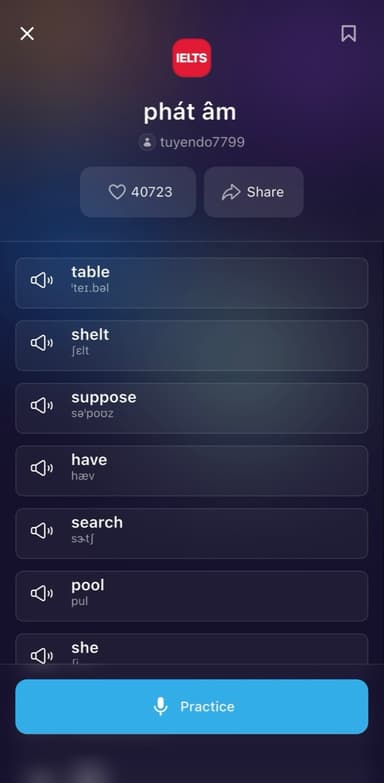
| ELSA Speak | A2–C1 | Topic lessons on pronunciation, vocabulary and grammar | AI scoring of each sound | 2 free lessons a day; Premium $19.99/mo |
|
👥 Real people
Best if you freeze in real conversations and need a live partner or tutor
|
||||
| italki | Any level the tutor adapts |
1-on-1 video lessons with a tutor you pick | Live corrections from the tutor | App free; tutors set their own lesson price |
| Preply | Any level the tutor adapts |
1-on-1 video lessons, often with a fixed weekly slot | Live corrections from the tutor | App free; tutors set their own lesson price |
| HelloTalk | A2 and up | Voice and text chat with native speakers | Partners correct your messages | Free; VIP $12.99/mo or $79.99/yr |
| Lingbe | A2 and up | Voice calls and group voice rooms with native speakers | Partners correct you during the call | Free; Lingbe Pro from $4.99 |
| Speak Pro | A2–C1 | Repeat after real people in YouTube videos, no booking needed | Word-by-word comparison with the original speaker | Free tier; Pro $7.99/mo or $49.99/yr |
|
🎙️ Speaking trainers
Best if you want structured drills with AI or coach feedback on your voice
|
||||
| ELSA Speak | A2–C1 | Pronunciation drills and AI conversation, English only | Sound-by-sound AI scoring | Premium $19.99/mo; yearly from $99.99 |
| Praktika | A1–B1 | Conversations with AI avatar tutors | AI comments on what you said | Premium from $9.99/mo; yearly from $119.99 |
| Speak | A1–B2 | AI-led speaking lessons and role-play conversations | AI feedback on pronunciation and fluency | $17.99/mo or $83.99/yr; Premium Plus $39.99/mo |
| Speak Pro | A2–C1 | Shadowing drills sentence by sentence, from 0.5x to 1x speed | Word-by-word comparison with the original speaker | Free tier; Pro $7.99/mo or $49.99/yr |
Speak Pro appears twice because it sits between two groups: you repeat after real people, as with a tutor, but you practise alone with feedback from the app, as with a speaking trainer. ELSA Speak works both as a course and as a trainer. Levels use the CEFR scale (A1 to C2) and are our own estimate.
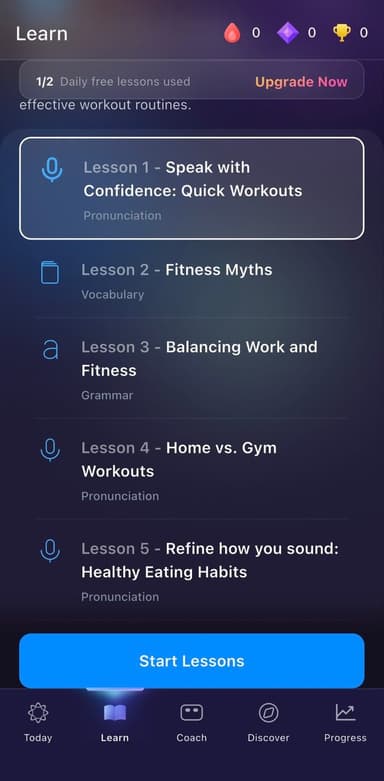
1. Structured courses: Babbel, Busuu, Pimsleur and Rosetta Stone
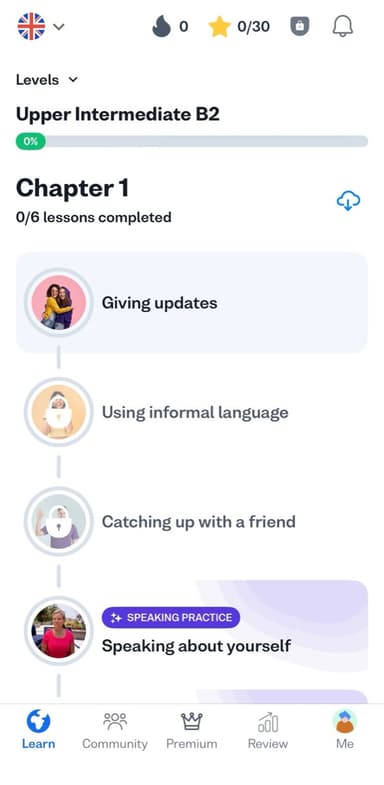
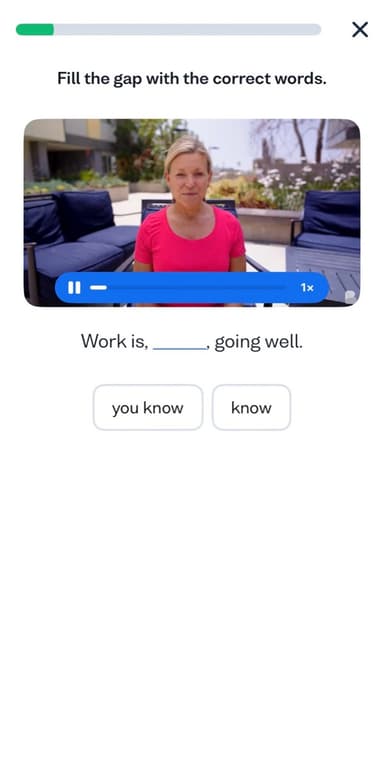
Babbel, Busuu, Pimsleur and Rosetta Stone replace Duolingo's lesson path with a course that has a clearer line and more speaking per lesson. Of the four, Pimsleur asks for the most speaking, since its lessons are built around answering out loud.
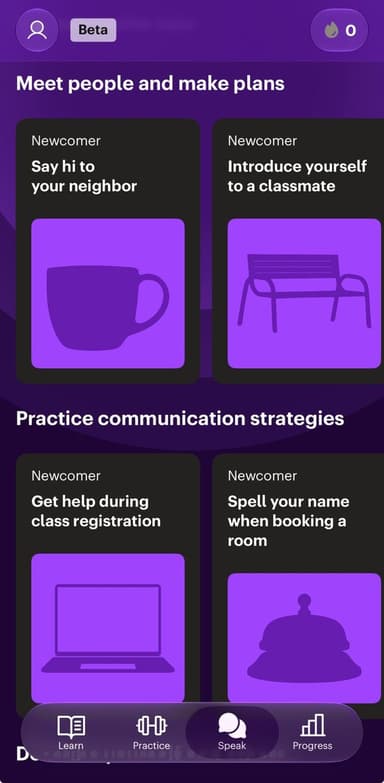
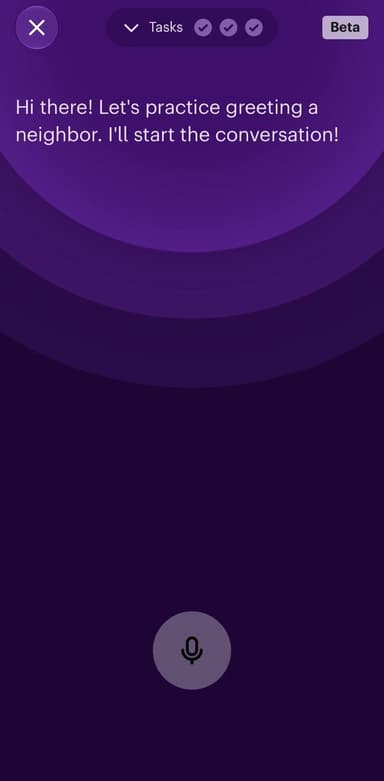
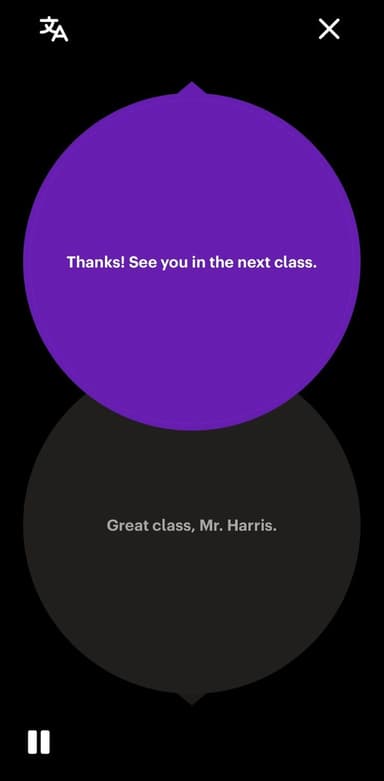
Babbel is the usual answer to "babbel vs duolingo". Its lessons are built around short dialogues, so you say whole lines rather than single words. The trade-offs are price and volume. One language costs $17.99 a month on the US App Store, there is no free plan, only a trial, and when we tried it the speaking material ran out quickly. A newer conversation mode, still marked Beta, walks you through short scenarios such as greeting a neighbor.
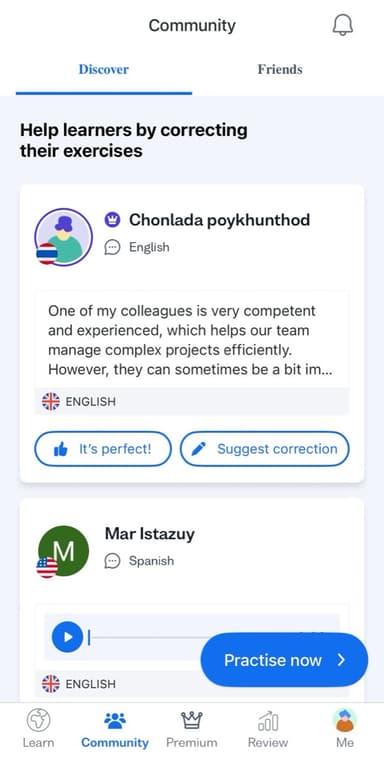
Busuu adds the one thing the other courses lack, which is a human looking at your output. You record a spoken answer and native speakers in the community leave corrections. Quality varies with whoever answers, but even a rough correction tells you something a green checkmark never will.
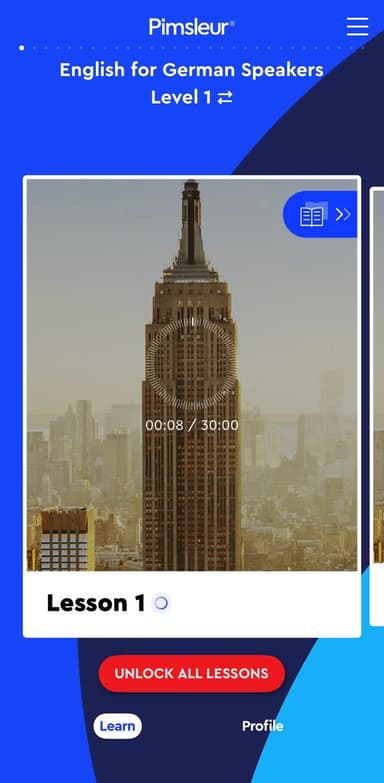
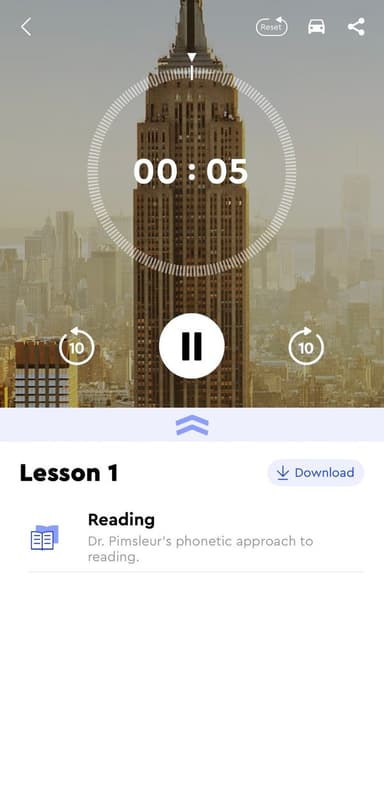
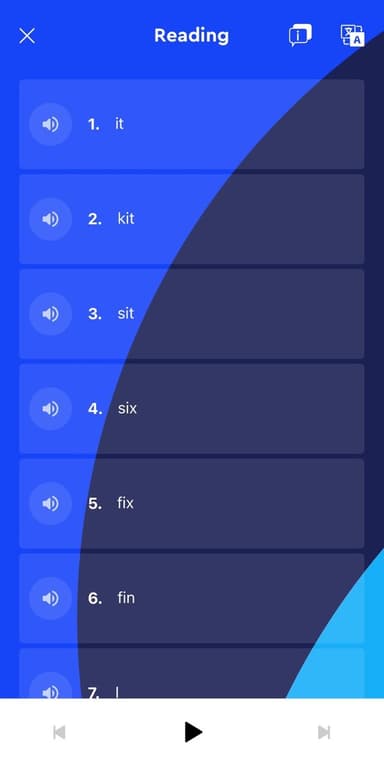
Pimsleur is the most audio-heavy option. Each 30-minute lesson plays a prompt, waits for you to answer aloud, then gives the native answer. During the lesson there is no text to hide behind; a short reading section comes separately, after the audio.
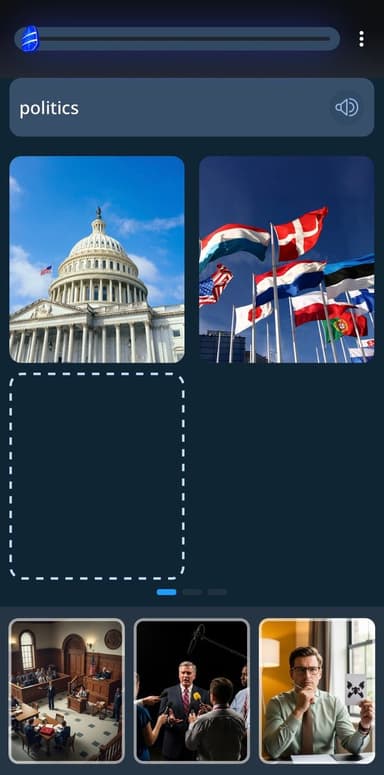
Rosetta Stone Sapphire is the new Rosetta Stone app for new learners; the older Rosetta Stone Classic is now only for existing subscribers and schools. It teaches without translation: pictures, audio and the target language only, and its TruAccent speech recognition compares your voice with native speakers. Its drills train clear words more than fast conversation.
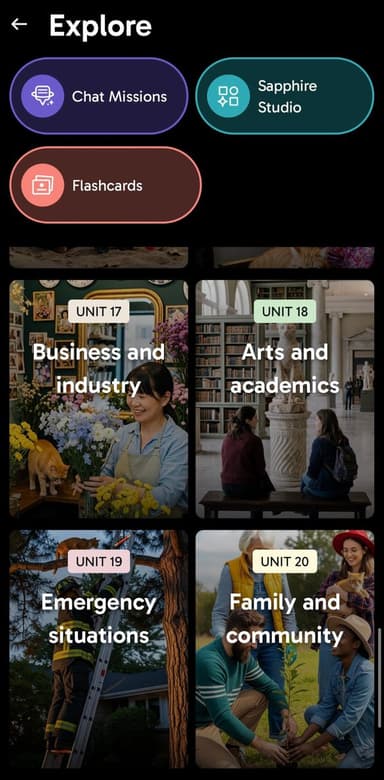
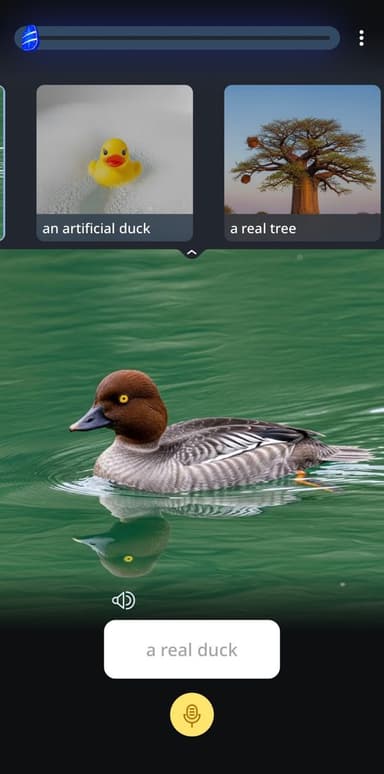
ELSA Speak, covered with the speaking trainers below, also works as a course. Its lessons are grouped by topic, and each one focuses on pronunciation, vocabulary or grammar. The free plan allows two lessons a day.
2. Real people: italki, Preply, HelloTalk and Lingbe
Tutors on italki and Preply and partners on HelloTalk and Lingbe are the Duolingo alternatives that put you in front of real people, the most direct cure for freezing in conversation. italki and Preply sell paid 1-on-1 lessons; HelloTalk and Lingbe are free exchanges with native speakers learning your language.
| 🎓 Tutor (italki, Preply) | 🤝 Exchange partner (HelloTalk, Lingbe) | |
|---|---|---|
| Cost | Paid per lesson | Free, with optional paid plans |
| Who corrects you | A teacher whose job is to correct you | A peer, when they feel like it |
| Speaking time per session | Most of the lesson, if you ask for it | Half, since you also help your partner |
| Best moment to start | From the first weeks | Once you can hold a short chat |
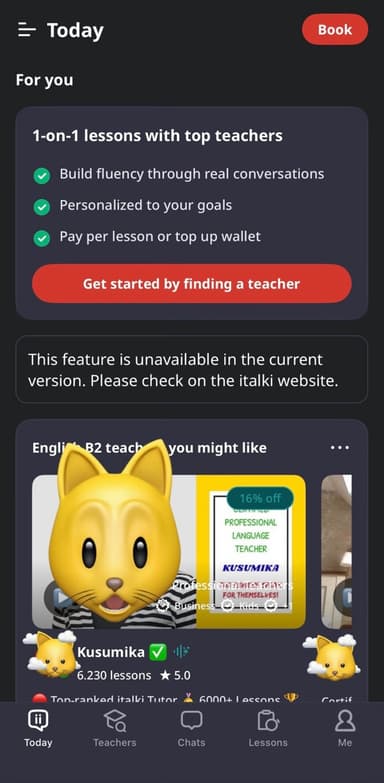
italki works best when you tell the tutor up front that you want to talk, not to work through a textbook. Two 30-minute sessions a week with prepared topics do more for speaking than a hundred Duolingo lessons.
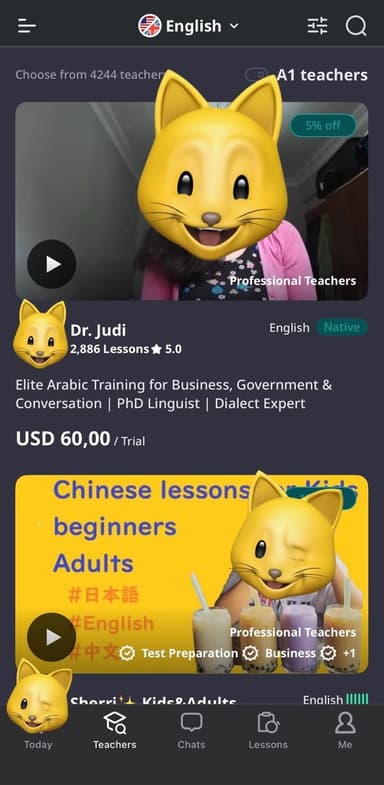
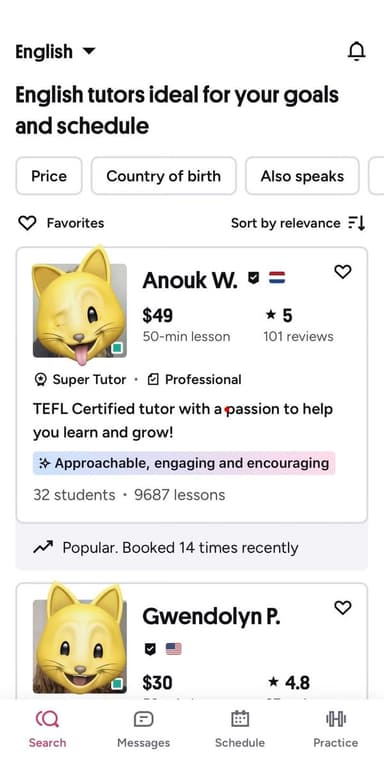
Preply works the same way, with more structure around it: most learners pick one tutor and book a fixed weekly slot, and the tutor plans the lessons around a goal.
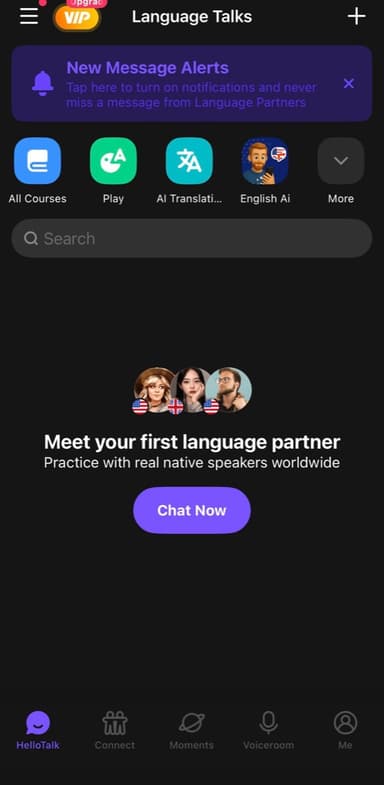
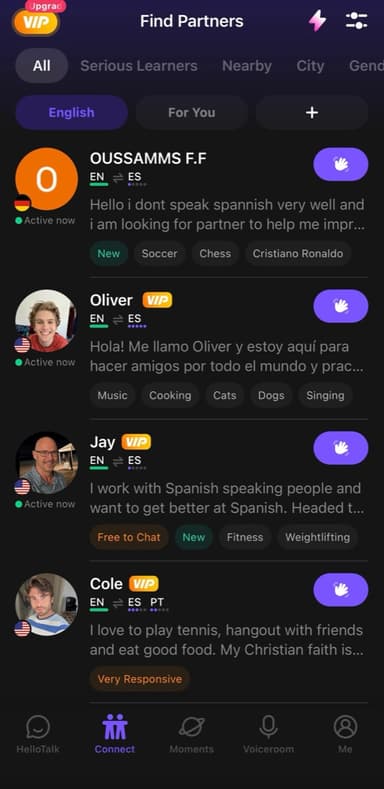
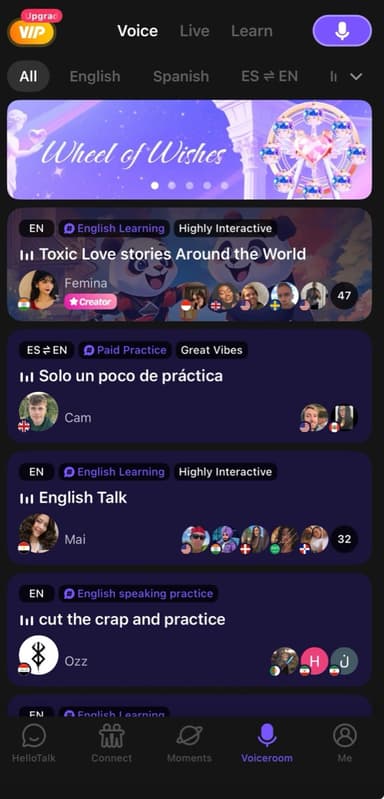
HelloTalk is cheaper and messier. You will find patient partners and you will find people who disappear after two messages. Voice messages are the feature to use: record one, ask for a correction, and re-record it until it sounds right. Voiceroom adds open group voice chats by topic.
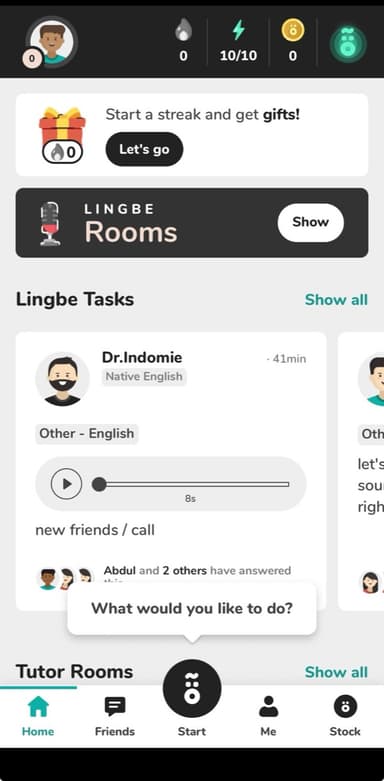
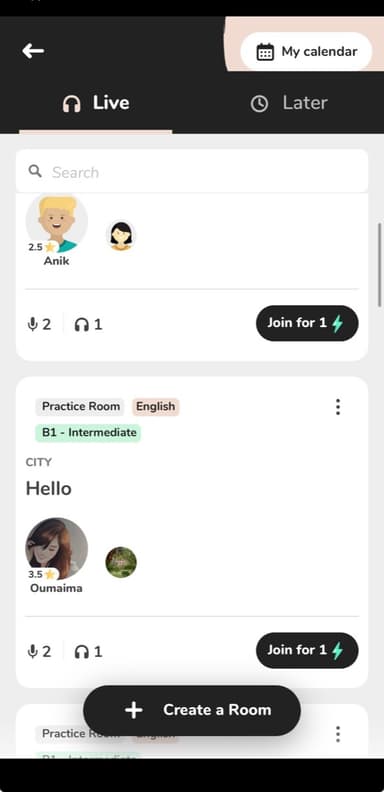
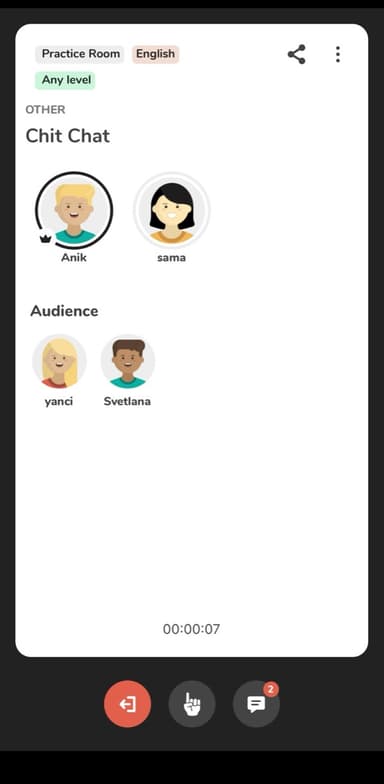
Lingbe is built around voice only. You join a live practice room filtered by level, or call a native speaker straight away, with no texting first. Calls cost "lingos", which you earn by helping people learning your language. Treat a call as a lesson with a plan, and it becomes free speaking practice.
The honest catch with all four is nerves. Plenty of learners download italki, browse tutors for a week and never book. If that sounds like you, the next two groups exist for exactly that gap.
3. Real speech, practised alone: Speak Pro
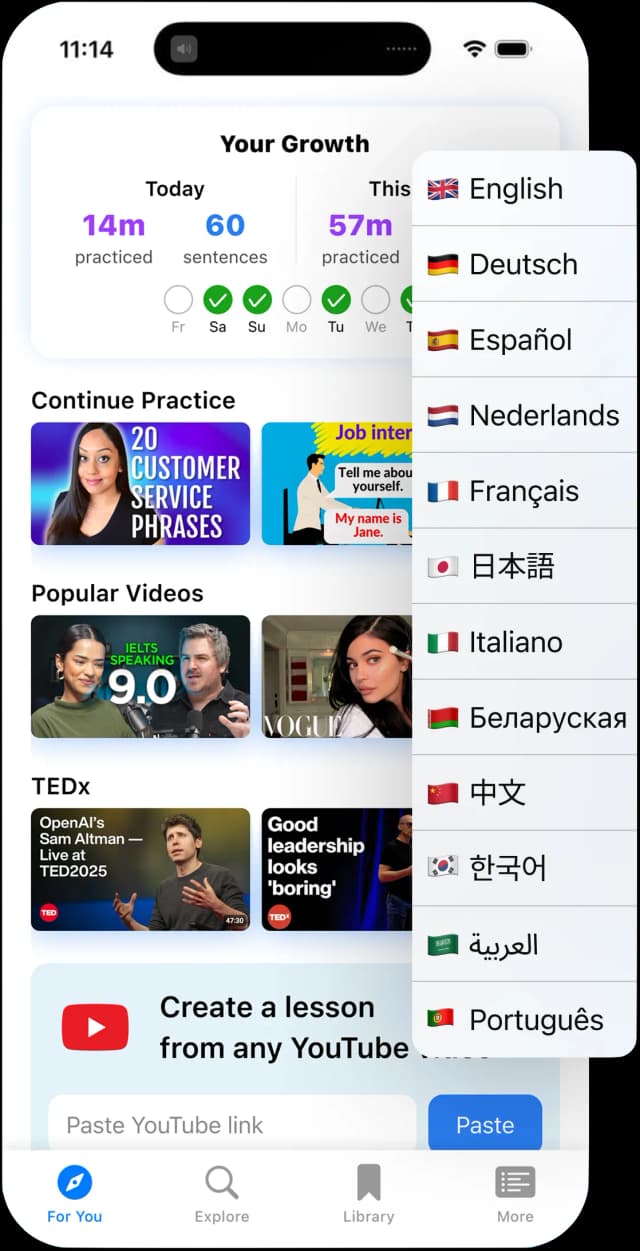
Speak Pro sits between real people and speaking trainers. You repeat after real people, as in the group above: the voices come from real interviews, talks and film scenes on YouTube, not from actors reading a script. But you practise alone, at your own pace, as with a trainer, and the app compares your recording with the original speaker word by word.
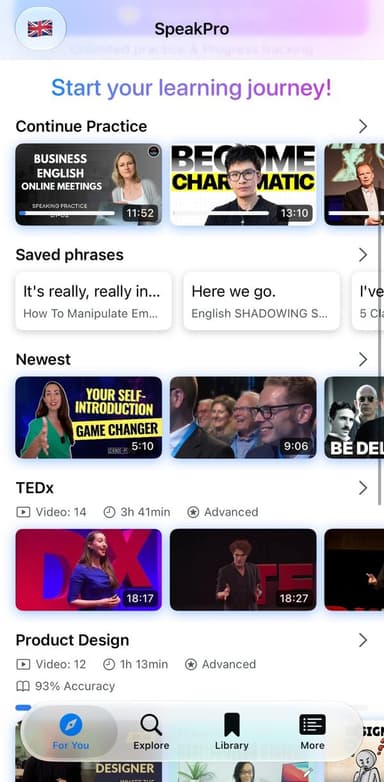
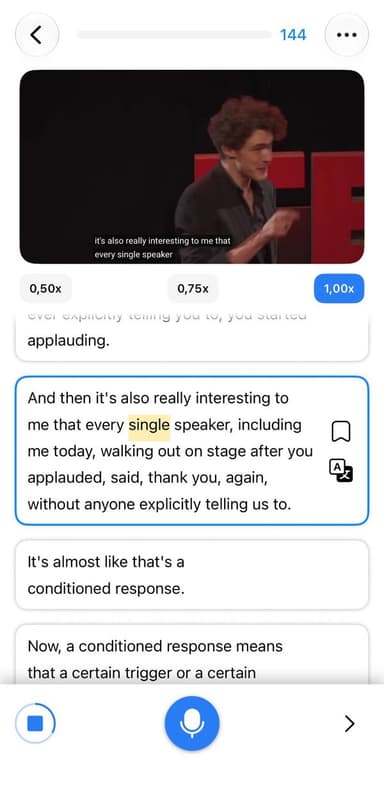
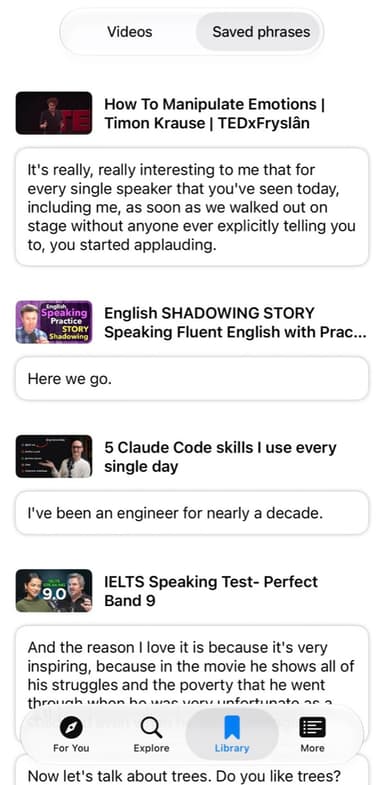
Speak Pro is the app behind this blog. The method is called shadowing: because the speech is unscripted, it trains the rhythm, speed and linking of how people really talk. It covers 11 languages.
4. Speaking trainers: ELSA Speak, Praktika and Speak
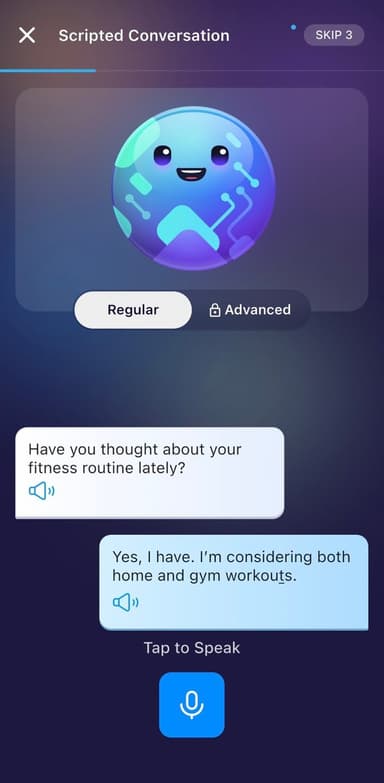
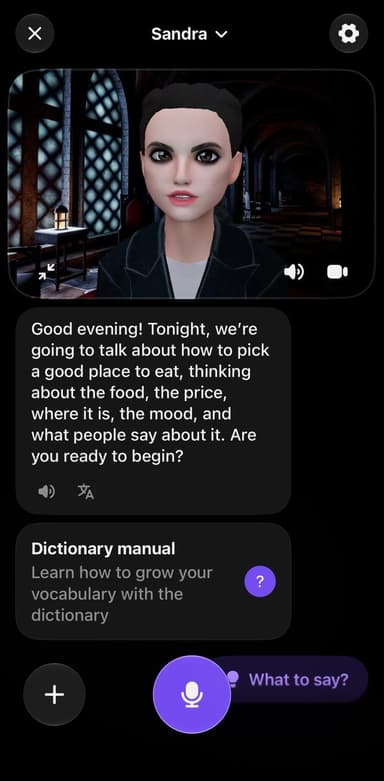
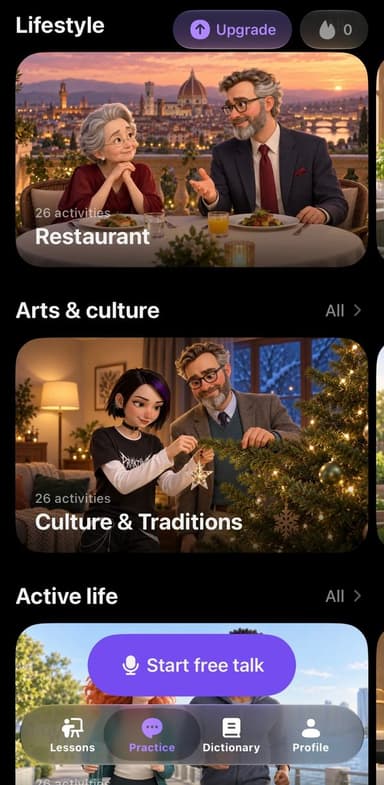
Speaking trainers are the Duolingo alternatives that train your voice without another person in the room, using audio made for the app. ELSA Speak scores English pronunciation sound by sound. Praktika runs conversations with AI avatars. Speak teaches through AI-led speaking lessons.
| App | 🔊 The voice you copy | 🎯 Who checks you |
|---|---|---|
| ELSA Speak | Lesson audio recorded for the app | AI, sound by sound |
| Praktika | An AI avatar's voice | AI, after the conversation |
| Speak | An AI tutor and lesson audio made for the app | AI, on pronunciation and fluency |
| Speak Pro (for comparison) | Real people speaking in real videos | Word-by-word comparison with the original |
ELSA Speak is English only, and within that it is precise: it tells you which sound in which word went wrong. If your goal is a clearer English accent for work, it is the most focused tool in this list.
Praktika suits learners who want to rehearse conversation before trying it with a person. You talk to an AI avatar about a topic and get comments afterwards. The topics are simple and everyday, so it fits beginners up to B1 better than advanced learners.
Speak, not to be confused with Speak Pro, is the most course-like trainer here: short AI-led lessons where you say the target phrases out loud, then open role-plays with an AI tutor. It covers seven languages.
How to switch from Duolingo without losing the habit
Switching from Duolingo works best as a two-week test, not a clean break. Keep the five-minute Duolingo streak if it helps you show up, and put the next fifteen minutes into one speaking tool from this list. After two weeks, record yourself telling the same short story you recorded on day one, and compare.
| 📅 When | What you do |
|---|---|
| Day 1 | Record a 60-second voice memo about your day. Do not edit it. |
| Days 1 to 14 | Five minutes of Duolingo, then fifteen minutes of speaking practice in one app from the table. |
| Every day | Shadow one short movie scene, a few lines at a time, until you keep pace with the actors. |
| Day 14 | Record the same 60-second story again and play both versions back to back. |
Most people hear the difference in pauses first: fewer "um" gaps and longer runs of words. Fifteen minutes a day adds up to three and a half hours of speaking in two weeks.
Why speaking practice beats a longer streak
A Duolingo streak measures how often you open the app, not how much you speak. Speaking is a motor skill: your mouth has to produce sounds and phrases fast enough for a conversation, and that speed only comes from saying things out loud many times.
| 🔥 A long streak shows | 🗣️ Speaking needs | |
|---|---|---|
| Practice unit | Days you opened the app | Minutes you spoke aloud |
| Speed | You answer at your own pace | You keep up with someone else's pace |
| Material | Sentences written for a course | Speech the way people actually say it |
| Mistakes | Marked wrong, then forgotten | Heard, repeated and fixed |
None of this means Duolingo is useless: its research team publishes studies on learner progress (research.duolingo.com), and a daily habit is a real asset. But if the goal is to talk, the minutes have to be spoken. We go deeper into why that gap appears in why you still can't speak fluently.
Common questions about Duolingo alternatives
Is there a free alternative to Duolingo?
Yes. HelloTalk and Lingbe are free for language exchange with native speakers, with optional paid plans. Busuu, Praktika and Speak Pro have free tiers with daily limits. A free exchange app plus daily shadowing is the cheapest way to start speaking.
Is Babbel better than Duolingo?
Not clearly. Babbel's lessons use short dialogues, but in our test the speaking material ran out quickly. It has no free plan, only a trial, then costs $17.99 a month per language on the US App Store, while Duolingo is free. Neither replaces real speaking practice with a tutor, an exchange partner or shadowing.
Can you become fluent with Duolingo alone?
Most learners cannot reach speaking fluency with Duolingo alone, because the app trains recognition more than fast spoken output. Duolingo builds vocabulary and a daily habit well. To speak fluently you need regular out-loud practice at natural speed, such as tutor sessions, conversation exchanges or shadowing real speakers, added on top.
The bottom line
The best Duolingo alternatives for speaking are the ones that make you talk: a structured course with more audio, a real person, or a trainer that listens to your voice. Pick one by budget and nerves, keep your streak if it helps, and give it two weeks of fifteen spoken minutes a day before you judge it.
What matters is that tomorrow's practice includes your own voice.
Ready to finally speak instead of just study?
Turn any YouTube video into a guided shadowing session with instant AI feedback. Daily speaking practice becomes effortless.